
Wax & Words
Natural vs Lab-Grown Diamonds: What’s the Difference?

A Guide to Natural and Lab-Grown Diamonds for Modern Heirlooms
If you're searching for the difference between natural diamonds and lab-grown diamonds, you’re not alone.
More couples than ever are asking:
-
Are lab-grown diamonds real?
-
Do they last as long as natural diamonds?
-
Are they graded the same?
-
Which is better for an engagement ring?
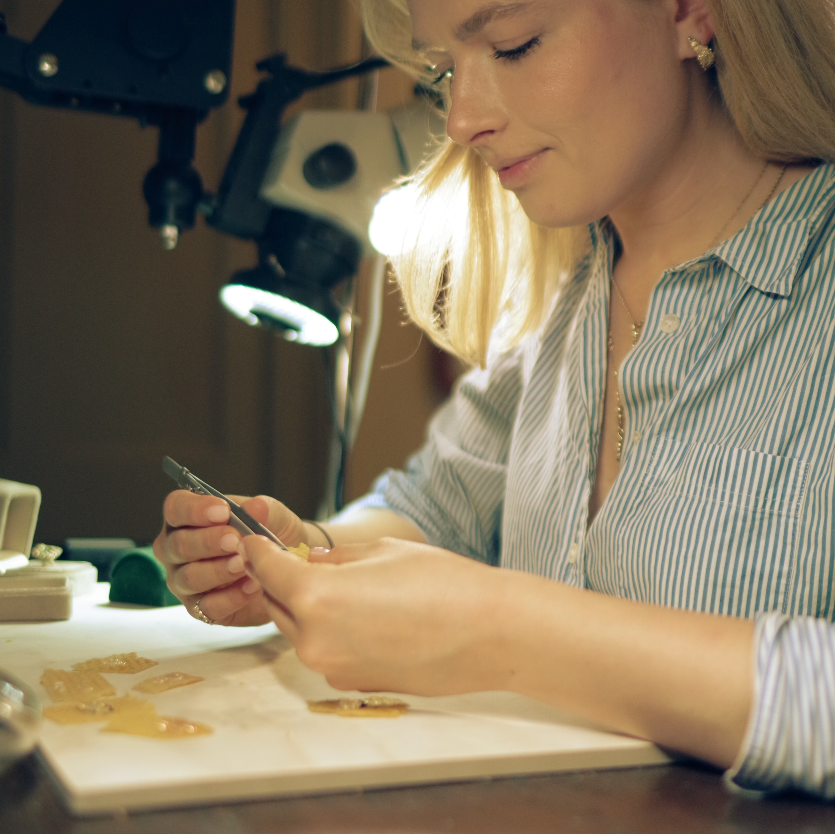
As a beeswax-carved jewellery designer working with both natural and lab-grown diamonds in solid gold, I believe the answer isn’t about better.
It’s about understanding origin, meaning, and intention.
Let’s explore the differences - and the beauty - of both.
What Is a Natural Diamond?
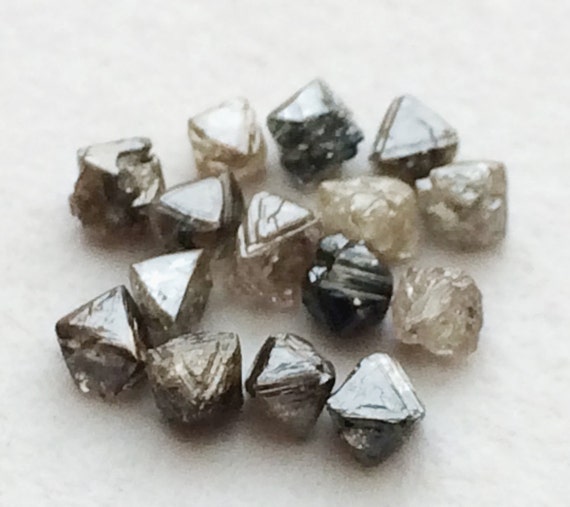

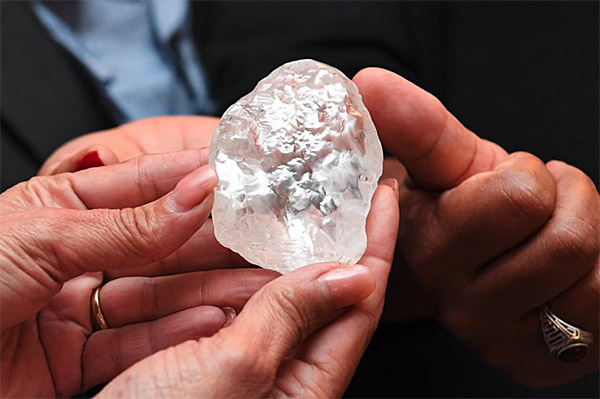
A natural diamond is formed deep within the earth, between 1–3 billion years ago.
Under extreme heat and pressure, carbon atoms bond together in a crystalline structure. Over time, volcanic activity brings these diamonds closer to the earth’s surface, where they are eventually mined.
Because of their geological journey, natural diamonds often contain internal inclusions — tiny characteristics formed during their growth. These natural markings are like fingerprints, making each stone entirely unique.
Why choose a natural diamond?
-
Formed naturally over billions of years
-
Traditionally associated with heirloom jewellery
-
Geological rarity
-
Long-standing cultural and historical significance
For many, the romance lies in knowing their diamond was created long before human history.
What Is a Lab-Grown Diamond?
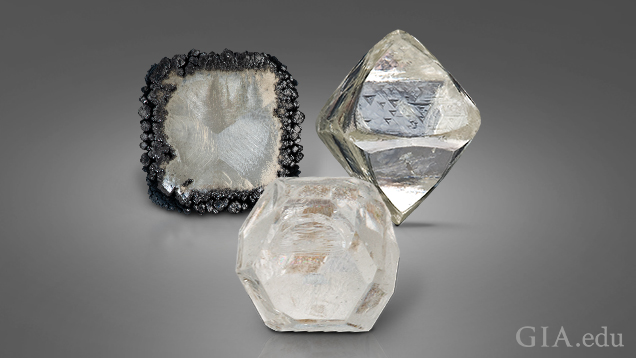
A lab-grown diamond (also called a laboratory-grown or man-made diamond) is a real diamond.
It is not cubic zirconia.
It is not a diamond simulant.
Chemically, physically, and optically - it is identical to a natural diamond.
The only difference is how it forms.
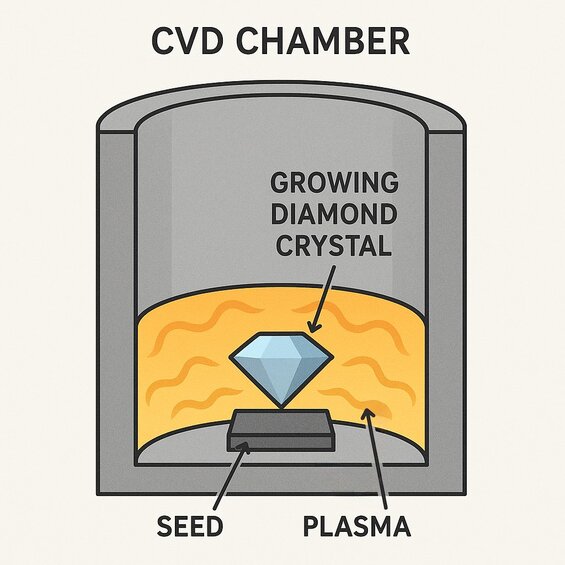
Instead of growing underground, lab-grown diamonds are created using advanced technology that replicates the natural diamond-growing process.
There are two main methods:
-
HPHT (High Pressure High Temperature) – replicates the earth’s natural environment.
-
CVD (Chemical Vapour Deposition) – grows the diamond layer by layer from carbon-rich gas.
Both methods produce diamonds made of pure carbon with the same crystal structure and hardness (10 on the Mohs scale).
Why choose a lab-grown diamond?
-
Identical structure and brilliance to natural diamonds
-
Typically more affordable per carat
-
Allows for a larger stone within the same budget
-
Created using advanced modern technology
For many couples, lab-grown diamonds represent innovation and accessibility without compromising beauty.
Are Lab-Grown Diamonds Real?
Yes.
Lab-grown diamonds are 100% real diamonds.
They:
-
Are made of pure carbon
-
Have the same crystal structure
-
Score 10 on the Mohs hardness scale
-
Display the same fire, brilliance and sparkle
Even professional gemmologists require specialised equipment to determine whether a diamond is natural or lab-grown.
To the naked eye - and even under magnification - they look identical.
How Are Natural and Lab-Grown Diamonds Graded?
Both natural and lab-grown diamonds are graded using the same internationally recognised standards.
Leading gemmological laboratories such as:
-
GIA
-
IGI
assess diamonds according to the 4Cs:
-
Cut – How well the diamond reflects light
-
Colour – Graded from D (colourless) to Z
-
Clarity – Internal inclusions and surface blemishes
-
Carat – Weight of the diamond
Lab-grown diamonds are clearly identified as laboratory-created on certification for transparency.
Structurally and chemically, however, they remain the same material.
Natural vs Lab-Grown Diamonds: Which Is Better?
The truth is - neither is better.
They simply carry different origins.
A natural diamond tells a story of geological time.
A lab-grown diamond tells a story of human innovation.
Both are enduring.
Both are precious.
Both are diamonds.
The choice often comes down to:
-
Personal philosophy
-
Budget considerations
-
Emotional connection to origin
Choosing a Diamond for an Engagement Ring
When selecting a diamond engagement ring in the UK, couples are increasingly choosing based on intention rather than tradition alone.
What matters most is:
-
The craftsmanship of the setting
-
The quality of the cut
-
The meaning behind the piece
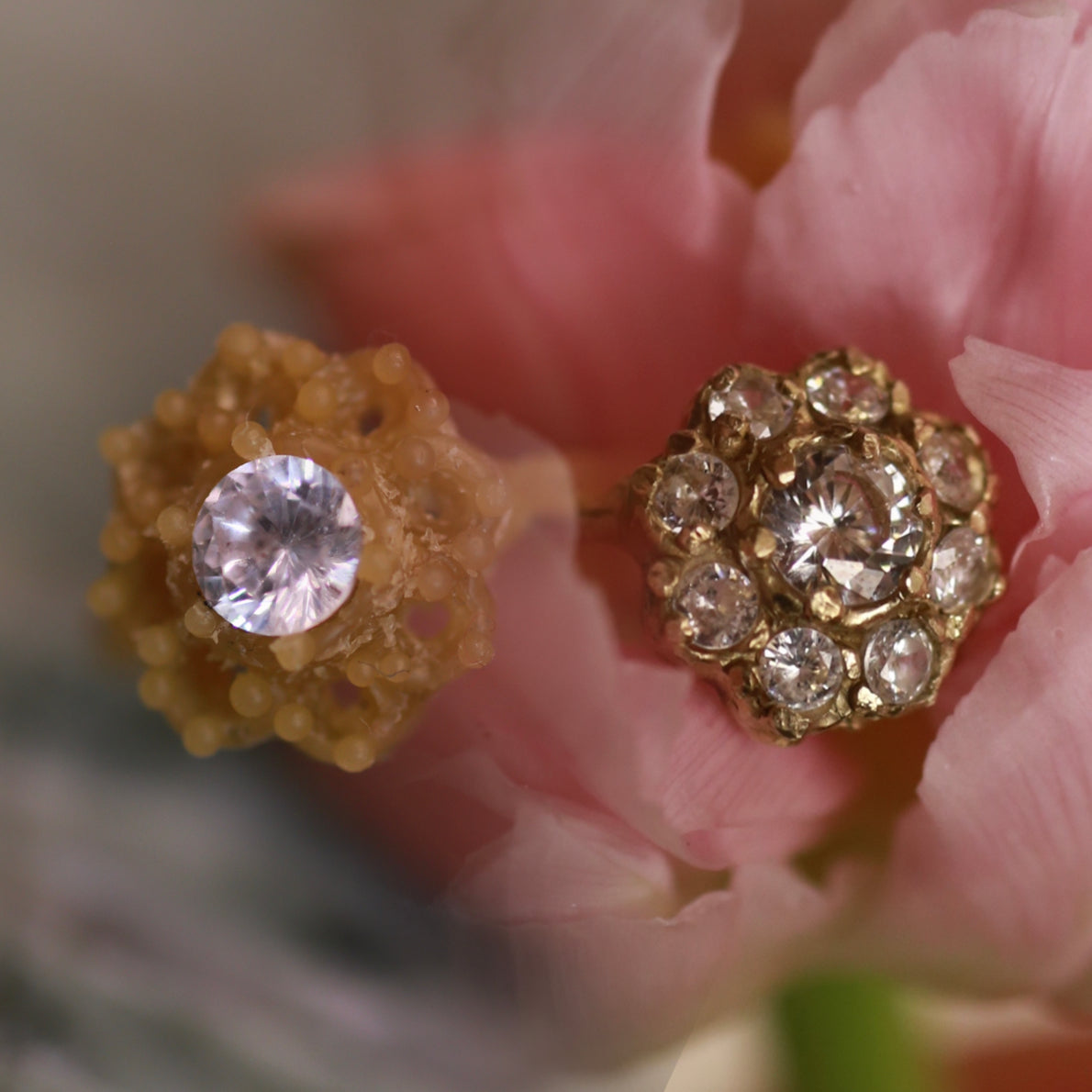
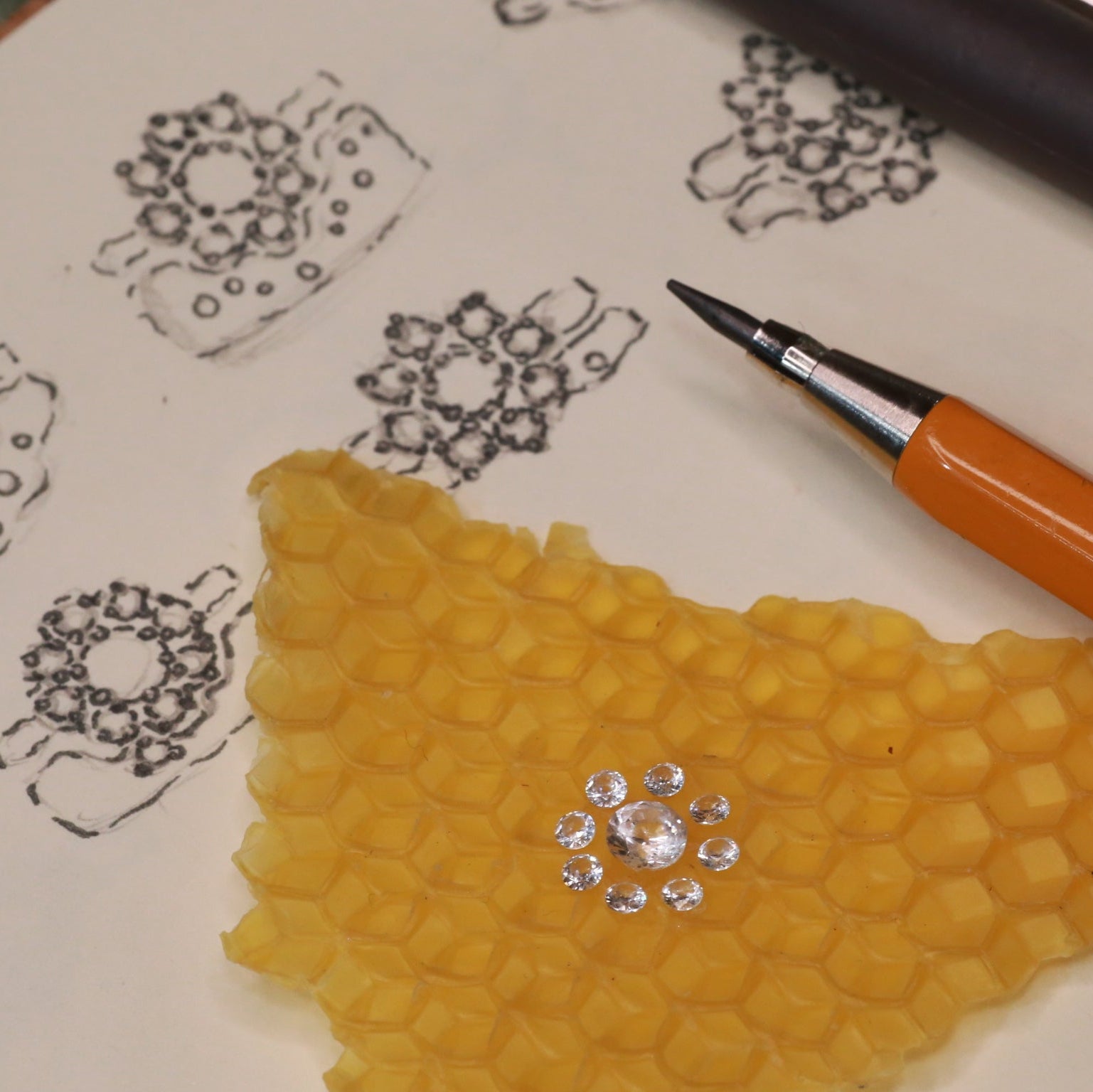
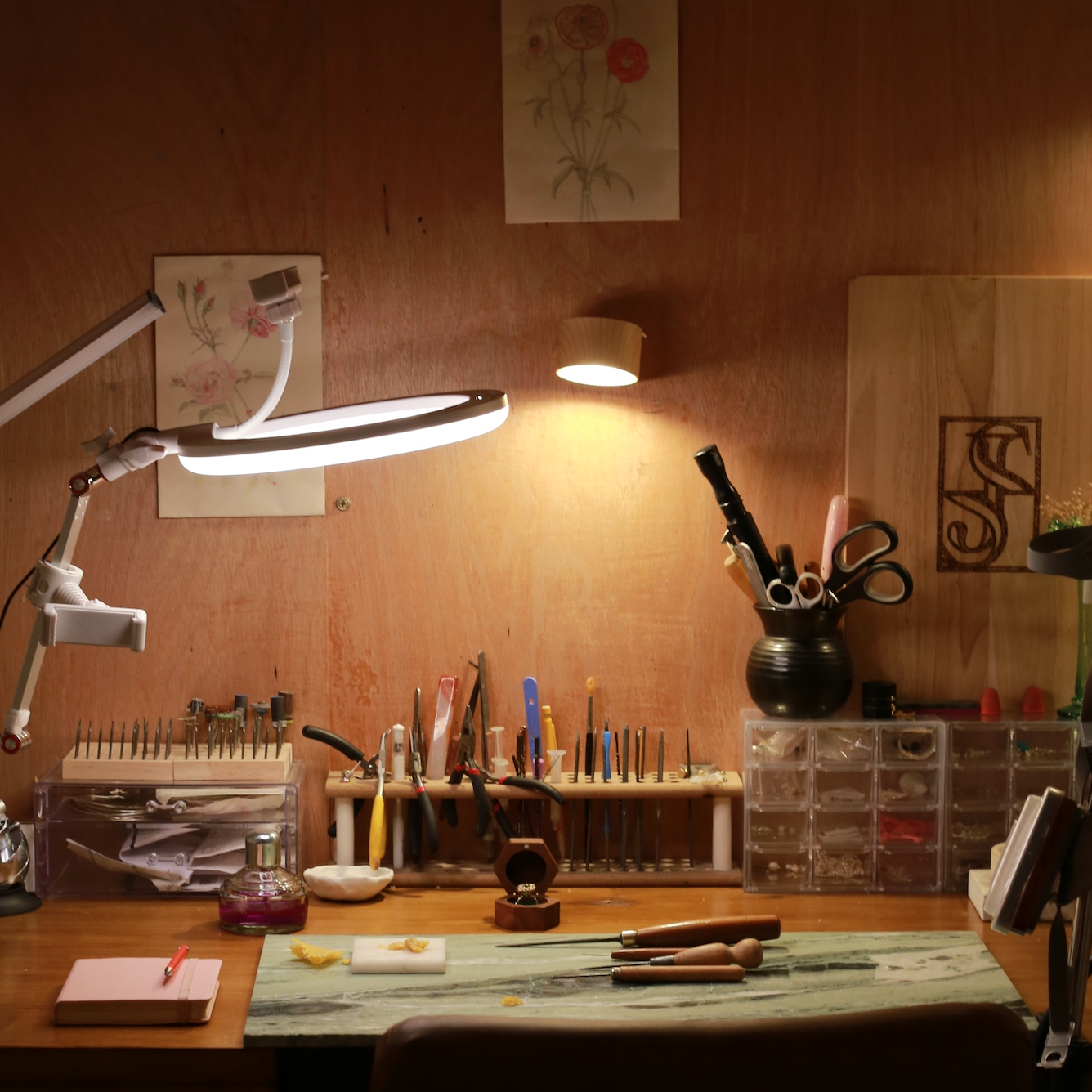
At S J Snow Jewellery, every ring begins in beeswax - carved entirely by hand. Inspired by the symbiotic dance between bees and flowers, the wax is transformed into solid gold using the ancient lost-wax casting method - a technique over 6,000 years old.
In my bespoke work, I have always worked with both natural and lab-grown diamonds. Each client values something slightly different - whether that’s geological origin, carat size, budget flexibility, or embracing modern innovation.
Over the past year in particular, I’ve seen a significant increase in interest in lab-grown diamonds for a number of reasons. Not as a replacement for natural diamonds, but as a thoughtful evolution in how couples approach engagement rings.
Because of this growing demand, I’ve decided that my upcoming collection will offer both natural and lab-grown diamonds as options.
Whether set with a natural or lab-grown diamond, the process remains the same.
Organic.
Ancient.
Made to outlive us.
Ancient Craft. New History.
As I prepare to launch Aurea Flora II - The Vow, I’ve chosen to celebrate both natural and lab-grown diamonds within the collection.
Because when a diamond - whether formed billions of years ago or grown through modern innovation - is set into a piece carved by hand and cast in gold…
It transcends trend.
It becomes heirloom.
A lab-grown diamond placed into an anciently made setting doesn’t diminish history.
It creates new history.
Final Thoughts: Understanding the Difference
If you're researching natural vs lab-grown diamonds, the most important thing to know is this:
They are the same in structure.
They are the same in brilliance.
They are graded the same way.
The only difference is origin.
And origin is a story you get to choose.
If you’re exploring engagement rings and would like guidance on selecting either a natural or lab-grown diamond, I’d love to help you find the stone that feels right for you.
Please contact me here
Aurea Flora II — The Vow
Launching soon.